Leaves. The needles
of the Fraser fir are less than an inch long, green on top and a
silvery green on the underside. The needles are the softest of
the firm branched trees needed to hold Christmas ornaments. The
aroma of the crushed buds or needles to me is similar to a
citrus odor. While shearing Fraser fir in the fall heat, the
smells emanating from the cut branches makes all the hard
work a bit more pleasurable.
Flowers.
Somewhat
inconspicuous.
Fruit. The cones of
the Fraser fir are erect as in all true firs, 1.5-2" long and
1" wide, conical in shape, gorgeous purple when new, browning with age and leaving a stem
as the seed fall off. The young cones are in my opinion a real
spring visual treat, be sure to look for them this June. The
cones are a source of concern for Christmas tree growers as the
seeds tend to slowly fall off during the fall. We run our
tree shaker after we cut the trees and before we set them up for
sale on our Christmas tree lot but there is still seed residue
left. Much work is being done by the National Christmas tree
growers association to find a solution to the cone problem.
Winter Buds. Has
small brown buds.
Bark. Trunks
on Fraser Fir is smooth, gray, on old trees fissured and
scaly.
Wood. The wood is
light, soft, weak, coarse- grain with wide rings and lighter
colored sapwood, not usually considered a lumber tree.
Pests.
The pine needle scale over winters in the egg
stage under the hard scale cover. There are sometimes 2
generations. The crawler stage starts when lilacs start to
bloom. Trees infested with the scale will be stunted and yellow.
A good organic spray for the pine needle scale is horticultural
oil. If one cares to make their own spray just use cooking oil
cut with a bit of dish detergent and add water. Spray when the
lilacs are in bloom.
Phytophthora root rot is best controlled by not
planting in a damp area.
Balsam wooly adelgid can kill the trees
and is destroying the fraser fir in it's native range.
Spruce spider mite lays the eggs in the fall on
the buds and the nymphs are most active during the cooler
weather. Shake the branch over white paper to see if the
infestation is heavy. You will need a 10x magnifier to see the
little buggers The nymphs are red changing to dark green as they
age. If you need a miticide make sure it is selective and wont
kill the predatory mites. Try soaps or oil spray to control
mites.
Cytospora canker is a fungus that destroy the
value of the host tree. Browning of the foliage may cover a
large part of the tree. Water during drought conditions may
help.
Two spotted spider mites are most active in warm
weather. If you notice a reddening of the needles do the white
paper test. Most spider mites can travel on a thread they
produce thus the name spider.
Distribution.
Fraser Fir can be grown successfully in the northern tier of
states with some success thru mid Ohio to northern Illinois. If
you live further south try a few to see how they do, these
really are the premier Christmas tree. If you have a north
facing slope they may do well .
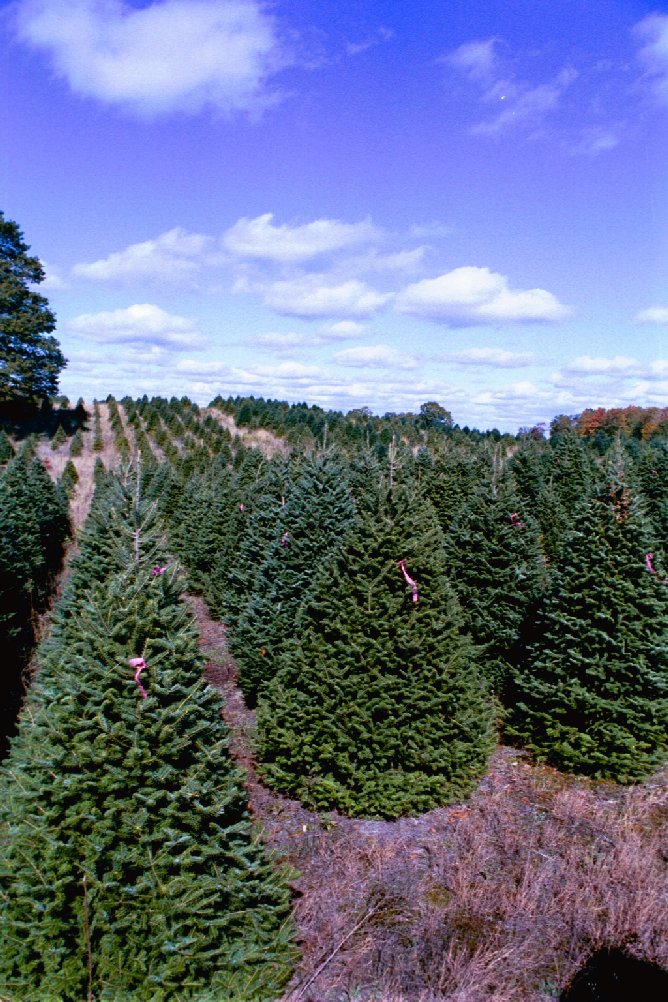
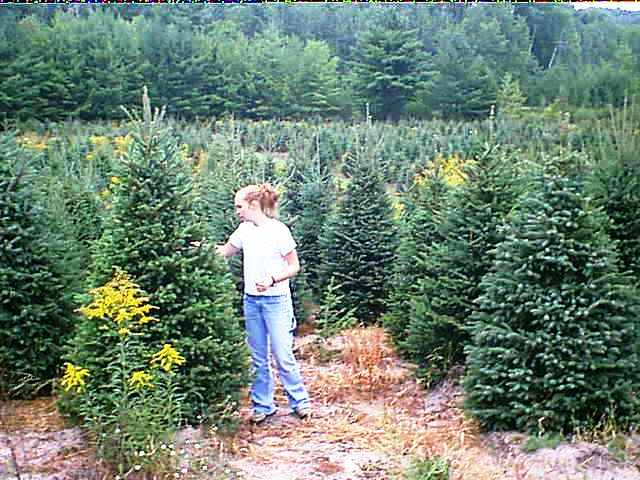
Other. Fraser
fir is in general the best Christmas tree for the northern
grower as it retains the needles well, has a great aroma, brings
top dollar and is a beautiful tree when sheared.
Cultivars. 'Kleins
nest' A dwarf variety that grows to 35". Available at
Riches Foxwillow
Pines.